


Domaine Faiveley Echézeaux Grand Cru En Orveaux 2023
Pinot Noir
£200.00

The Red Grape Behind Burgundy, Champagne and Cool-Climate Reds
Pinot Noir is the grape that makes wine people behave strangely. They start saying things like ethereal, haunting and translucent, which is usually your cue to check the price.
It is the red grape of Burgundy. It is one of the main grapes in Champagne. It is the reason people talk about Oregon, California and New Zealand with a faraway look.
Pinot Noir is not the biggest red wine. It is often the one people remember. Annoying, really.


 and more, live from leading UK retailers
Pinot Noir is a red grape variety that originated in Burgundy and is used to make still red wine, rose and sparkling wine.
Pinot Noir is famous because it can make red wine with fragrance, delicacy and complexity rather than brute force.
It is also famously difficult to grow. The grape has thin skins, tight bunches and a general air of needing reassurance.
But when Pinot Noir works, it can be extraordinary. It can taste of cherries, strawberries, roses, mushrooms, spice and earth.
Pinot Noir usually makes dry red wines with red fruit, floral and savoury flavours.
The thin skins explain both its pale colour and gentle tannins. Climate matters enormously. Cool-climate Pinot Noir tends to be lighter and more red-fruited, while warmer sites give riper, darker fruit.
Pinot Noir grows best in cool to moderate climates.
Pinot Noir's original and most famous home. Red Burgundy is Pinot Noir, from Bourgogne Rouge up to Grand Cru.
One of the main Champagne grapes. Brings body and red-fruit depth, and is the basis of Blanc de Noirs.
Grown as Spatburgunder. Modern examples are red-fruited, savoury and increasingly serious.
The Willamette Valley is one of the New World's most important Pinot regions.
Cooler zones such as Sonoma Coast and Russian River Valley give balanced, fruit-forward styles.
Central Otago and Martinborough are among the country's great red-wine strengths.
An emerging Pinot country, mostly for sparkling wine but increasingly for still red and rose.
Pinot Noir is unusually versatile for a red grape, making everything from pale still reds to sparkling wine.
The classic style. Light to medium bodied dry red wine, from easy-drinking bottles to age-worthy Burgundy.
A key grape in traditional-method sparkling wine, including Champagne, where it adds body and red-fruit depth.
White or pale sparkling wine made only from black grapes such as Pinot Noir, pressed gently so the juice stays pale.
Pale, fresh rose made by giving the juice only brief contact with the skins.
An early-ripening version, also called Fruhburgunder in Germany, giving lighter and earlier-drinking reds.
Pinot Noir hides behind several names and place names. A few terms unlock most bottles.
The grape named directly. Common in New Zealand, Oregon, California and Australia.
Made from Pinot Noir, though the grape name may not appear on the label.
The Burgundy hierarchy, from regional up to Grand Cru. Place drives price and reputation.
The German name for Pinot Noir.
White wine from black grapes, usually Pinot Noir or Meunier.
Pinot Noir

Pinot Noir13.5%

Pinot Noir13.5%

Pinot Noir
Pinot Noir

Pinot Noir12%

Pinot Noir13.6%

Pinot Noir13.5%

Pinot Noir12%


Pinot Noir12%
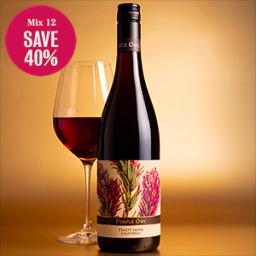
Pinot Noir


Pinot Noir
Pinot Noir is one of the best red grapes for food thanks to its freshness, moderate tannin and savoury complexity.
Pinot Noir works where heavier reds fail. Enough acidity to lift food, enough flavour to matter, rarely too much tannin.
Almost all red Burgundy is made from Pinot Noir, so the two are closely linked.
But the relationship only runs one way. Red Burgundy is Pinot Noir, yet plenty of excellent Pinot Noir comes from outside Burgundy, in Germany, Oregon, New Zealand and beyond.
Pinot Noir has a reputation for being pale and delicate, and much of it is.
Good Pinot Noir still has real acidity and structure, and from warmer sites and top producers it can show genuine depth and the ability to age.
Pinot Noir is a black-skinned red grape variety that originated in Burgundy, France. It is used for still red wine, rose and sparkling wine, including Champagne.
Pinot Noir usually tastes of red fruit such as strawberry, raspberry and cherry, with floral and savoury notes like rose, mushroom and forest floor. It is typically light to medium bodied, dry, with high acidity and soft tannins.
Pinot Noir is a red grape. It is most often made into red wine, but it can also make rose, and white or pale sparkling wine such as Blanc de Noirs.
Almost all red Burgundy is made from Pinot Noir. Not all Pinot Noir is Burgundy, though, as the grape is grown around the world.
Spatburgunder is the German name for Pinot Noir. German examples are increasingly well regarded, with red fruit and a savoury edge.
Yes. Pinot Noir is one of the three main Champagne grapes, alongside Chardonnay and Meunier. It adds body and red-fruit depth and is the basis of Blanc de Noirs.
Pinot Noir pairs well with duck, roast chicken, pork, mushrooms, salmon and tuna. Its freshness and moderate tannin make it one of the most food-friendly red wines.
A short chill helps. Serve lighter styles around 12 to 14C and fuller styles around 14 to 16C. Fifteen to twenty minutes in the fridge is usually enough.
Simple Pinot Noir is best drunk young. Better examples, especially from Burgundy and top New World producers, can age and develop for many years.
Pinot Noir drinkers often enjoy other light to medium bodied reds such as Gamay, Mencia, Nerello Mascalese, Frappato, Poulsard and Trousseau.
Pinot Noir is pale, difficult and frequently overpriced. It is also, inconveniently, one of the world's great red grapes. The reward is fragrance, freshness, texture and savoury complexity.