



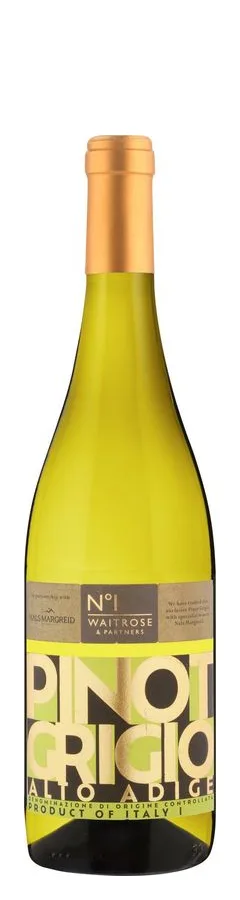
No.1 Pinot Grigio
Pinot Grigio13%
£16.00

Twenty regions, countless grapes and dinner improved almost everywhere.
The table is too small for what has been ordered. Tomato shines on a plate, sage crackles in butter, somebody is cutting salami and a jug of red has appeared without requiring a committee meeting. Outside, scooters argue with church bells. Inside, wine is doing its proper job beside food.
Italian wine is vast, local and gloriously resistant to a single explanation. Nebbiolo from misty Piedmont, alpine white from Alto Adige, Sangiovese from Tuscany, volcanic Carricante from Etna and sun-warmed Cannonau from Sardinia do not share a flavour. They share a culture in which wine belongs at the table before it belongs on a tasting grid.
The labels can appear determined to make the beginner earn dinner. Learn a few grapes, regions and terms, however, and the complication becomes choice. Italy offers crisp whites, savoury reds, serious sparkling wine, rosato, sweet passito and fortified Marsala at almost every level of ambition and expense. The difficult part is not finding something to drink. It is stopping the map from ordering another bottle.


 and more, live from leading UK retailers
Italian wine is the combined output of twenty regions, hundreds of protected origins and a vast collection of native and international grape varieties.
The Alps and Dolomites cool the north. The Apennines run down the peninsula, supplying altitude, slopes and a patchwork of exposures. The Adriatic, Tyrrhenian, Ionian and Ligurian seas moderate the coasts, while volcanoes have shaped vineyards around Etna, Vesuvius, Vulture and the hills of central Italy. Limestone, marl, clay, sand, granite, schist and volcanic ash ensure that the word Italian explains nationality more readily than taste.
The diversity is cultural as well as geological. Political unification arrived late, and regional food, dialect and agriculture remain powerful. A Piedmontese red is expected to make sense with braised beef and truffles; Verdicchio belongs beside Adriatic seafood; Tuscan Sangiovese understands tomato and roast meat; Lambrusco has excellent reasons for arriving with cured pork.
Italy's protected wine system uses European Union categories alongside traditional Italian terms. Denominazione di Origine Protetta, or DOP, includes wines labelled DOC and DOCG. Indicazione Geografica Protetta, or IGP, commonly appears as IGT. Each denomination has its own rules for origin, grapes, yields, ageing and style, which is why one neat national quality ladder soon develops side streets.
Famous names account for only part of the pleasure. Barolo, Brunello di Montalcino, Chianti Classico, Amarone della Valpolicella and Prosecco carry recognition and often price. Less familiar grapes such as Timorasso, Schioppettino, Pallagrello, Susumaniello, Nerello Mascalese and Nosiola keep the country from becoming a greatest-hits tour with laminated passes.
Modern growers are restoring old varieties and high vineyards, refining single-site bottlings and reconsidering extraction, oak, concrete, amphora and skin contact. Climate change is increasing the value of altitude, shade and drought-tolerant grapes. Tradition remains active because it is being argued with, not placed behind glass.
Italian wine ranges from alpine delicacy to Mediterranean richness, but freshness, savoury detail and usefulness with food recur across many of its best styles.
Sangiovese gives sour cherry, herbs and brisk acidity in Tuscany, Romagna and parts of central Italy. Nebbiolo combines pale colour with perfume, firm tannin and flavours of cherry, rose, tar and dried herbs. Barbera is darker, juicier and naturally high in acidity, while Dolcetto tends towards plum, almond and softer structure.
Corvina-based Valpolicella can be light and cherry-scented or, after grape drying, powerful and concentrated as Amarone. Montepulciano brings dark fruit and earthy generosity to Abruzzo. Aglianico offers tannin, acidity and volcanic or savoury depth in Campania and Basilicata. Farther south, Primitivo, Negroamaro and Nero d'Avola provide ripe fruit, spice and warmth, while altitude and sea air can keep them more agile than the latitude suggests.
Italian reds are often built around acidity rather than sweetness of fruit. This is why a wine that seems stern on its own can become remarkably civilised when tomato, fat, herbs and grilled meat arrive.
Northern whites include crisp Pinot Grigio, floral Pinot Bianco, aromatic Gewürztraminer, mountain Chardonnay and the fuller, textured wines of Friuli. Garganega in Soave can offer pear, citrus, flowers and almond. Glera provides the orchard fruit behind Prosecco, though still examples also exist.
Verdicchio combines lemon, apple, herbs, saline freshness and a characteristic almond finish in Marche. Vermentino brings citrus, flowers and coastal herbs in Liguria, Tuscany and Sardinia. Campania's Fiano, Greco and Falanghina can be smoky, waxy, floral or mineral, while Sicily's Carricante and Catarratto range from taut volcanic whites to broader Mediterranean styles.
The weakest generic whites can be thin and neutral, particularly when yield and price have written the brief. The best have texture, salt, bitterness and the sort of subtle authority that makes a plate of grilled fish disappear without witnesses.
Prosecco is usually made by retaining bubbles during a second fermentation in a pressurised tank, preserving Glera's pear and floral fruit. It ranges from simple and soft to focused wines from hillside zones. Franciacorta, Trentodoc and Alta Langa use bottle fermentation and lees ageing for more bread-like complexity, commonly from Chardonnay and Pinot Noir.
Lambrusco brings red fruit, acidity and bubbles to Emilia-Romagna, from dry and savoury to sweeter commercial forms. Asti and Moscato d'Asti are aromatic, grapey and lower in alcohol, while sparkling wines made from Durella, Verdicchio, Nerello Mascalese and other local grapes broaden the field considerably.
Rosato is made across Italy, with important traditions in Abruzzo, Puglia, Calabria, Sicily and around Lake Garda. Styles vary from pale and delicate to deeply coloured, savoury wines that can accompany a whole meal.
Friuli-Venezia Giulia has helped restore interest in white grapes fermented with their skins. The wines can show amber colour, tea-like tannin, dried fruit and herbs. Skin contact is a method, not a moral achievement.
Passito wine is made from grapes dried to concentrate sugar and flavour. Recioto, Vin Santo, Passito di Pantelleria and sweet wines from Malvasia or Moscato show how many local forms the method can take. Some retain piercing acidity; others are richer and more oxidative.
Marsala is Sicily's great fortified wine, produced in dry and sweet styles with different ageing categories. Serious Marsala is a wine for cheese, nuts, savoury cooking and contemplation, not merely a bottle bought because a recipe required two tablespoons in 2019.
Italian wine regions express strong local identities through grape varieties, landscapes, food cultures and protected denominations.
Piedmont is the home of Nebbiolo in Barolo and Barbaresco, Barbera in Asti and Alba, Dolcetto, aromatic Moscato and an important range of whites. The Langhe's marl and sandstone hills produce perfumed, structured reds, while Roero, Monferrato, Alto Piemonte and Tortona add sandy soils, alpine influence and grapes including Arneis and Timorasso. The famous wines can be formidable; the region's everyday drinking is often more immediately charming.
Lombardy stretches from the Alps to the Po plain and contains several distinct wine cultures. Franciacorta makes traditional-method sparkling wine, Valtellina grows mountain Nebbiolo known locally as Chiavennasca, and Oltrepò Pavese produces Pinot Noir, sparkling wine and lively reds. Lake influence and altitude cool many sites despite the region's northern continental climate.
Veneto produces Prosecco, Soave, Valpolicella, Amarone and a large volume of accessible wine. Hills around Conegliano and Valdobbiadene provide the most celebrated Glera sites, while Garganega excels on volcanic and limestone soils around Soave. Corvina, Corvinone and Rondinella give everything from light Valpolicella to dried-grape Amarone and sweet Recioto.
Friuli-Venezia Giulia sits between the Alps, Adriatic and Slovenian border. Collio and Colli Orientali are known for textured whites from Friulano, Ribolla Gialla, Sauvignon Blanc, Pinot Grigio and Malvasia, as well as reds including Schioppettino and Refosco. The region is also central to Italy's modern skin-contact wine story.
Trentino-Alto Adige is alpine wine country divided by language, culture and valley geography. Alto Adige, or Südtirol, produces precise Pinot Grigio, Pinot Bianco, Gewürztraminer, Schiava and Lagrein, while Trentino is known for Teroldego, Nosiola and bottle-fermented Trentodoc. Altitude and large day-night temperature swings preserve perfume and acidity.
Emilia-Romagna puts wine beside one of Italy's richest food cultures. Lambrusco's bubbles and acidity make immediate sense with salumi, tortellini and hard cheese, while Sangiovese dominates many Romagna reds and Albana makes dry and sweet whites. The region suffers when its sparkling red is judged only by cheap sweet exports, rather as an opera singer might object to being assessed through a ringtone.
Tuscany is Sangiovese country, expressed through Chianti, Chianti Classico, Brunello di Montalcino, Vino Nobile di Montepulciano and many smaller origins. Galestro, alberese, clay and sandstone soils combine with hills and dry Mediterranean influence to produce wines of cherry, herbs, earth and firm acidity. Cabernet Sauvignon, Merlot and Cabernet Franc also matter, particularly in coastal Maremma and IGT wines.
Central Italy beyond Tuscany offers a broad range rather than one convenient style. Umbria has Sagrantino, Sangiovese, Grechetto and Orvieto; Marche excels with Verdicchio, Montepulciano and Lacrima; Lazio produces Frascati and increasingly ambitious wines from Cesanese, Bellone and Malvasia. The Apennines, Adriatic and volcanic soils around Rome shape markedly different wines.
Abruzzo combines Adriatic air with high Apennine mountains. Montepulciano d'Abruzzo gives dark, generous red, Cerasuolo d'Abruzzo makes substantial rosato, and Trebbiano d'Abruzzo can range from simple refreshment to profound, ageworthy white. Smaller Molise continues the Adriatic and mountain pattern with Montepulciano, Aglianico, Falanghina and the local Tintilia grape.
Campania has volcanic soils, coastal heat and mountain vineyards. Aglianico forms the stern, long-lived reds of Taurasi, while Fiano, Greco and Falanghina make whites with smoke, citrus, flowers and mineral grip. Vineyards around Vesuvius, Irpinia, Benevento and the Amalfi coast show that southern Italian wine is not shorthand for ripeness alone.
The southern mainland supplies warmth, old vines and grapes with strong regional character. Puglia is known for Primitivo, Negroamaro and Nero di Troia; Basilicata for Aglianico grown on the volcanic slopes of Monte Vulture; Calabria for Gaglioppo, Magliocco and Greco Bianco. Better site selection and restrained winemaking have replaced much of the old bulk-wine image with fresher, more articulate bottles.
Sicily combines Mediterranean sun with mountains, sea winds and active volcanic geology. Etna's Nerello Mascalese and Carricante grow at altitude on lava soils, while Nero d'Avola, Frappato, Grillo, Catarratto and Zibibbo express very different parts of the island. Marsala's fortified tradition and a vigorous modern table-wine culture belong to the same place without needing to taste alike.
Sardinia has a distinct island identity shaped by wind, granite, limestone and long Mediterranean exposure. Cannonau, related to Grenache, gives warm herbal red; Vermentino makes citrusy, saline white; Carignano excels in the south-west; and grapes including Monica, Bovale and Nuragus preserve local variety. The wines often taste sunlit, but the best retain the lift supplied by wind and sea.
Italian wine labels use national and European quality terms alongside local words for origin, ageing, geography and production method.
Vino is the broad basic wine category without a protected geographical indication. It may be simple, but the category itself is not a formal verdict on pleasure. Some experimental producers also step outside denomination rules deliberately.
Indicazione Geografica Tipica, or IGT, is the traditional Italian term corresponding to the European Protected Geographical Indication, or IGP. It links wine to a broad place while generally allowing more flexibility in grapes and methods than DOC or DOCG. Tuscany's influential wines made from international grapes helped prove that flexibility and ambition can share a label.
Denominazione di Origine Controllata, or DOC, is an Italian protected-origin term within the European DOP category. Each DOC has production rules covering its defined area, permitted grapes and wine styles. DOC tells you the wine complied with those rules, not that every producer used them with equal inspiration.
Denominazione di Origine Controllata e Garantita, or DOCG, is a traditional Italian category within DOP, with additional controls and a government seal across the closure. It is associated with many famous origins, but it should be read as a regulated designation rather than a universal scoreboard.
Classico normally identifies the historic core of a larger denomination, as in Chianti Classico, Soave Classico or Valpolicella Classico. Rules and geographical meaning vary by origin. It does not mean classical in style or guarantee that someone has aged the wine beside a marble bust.
Superiore usually indicates stricter production requirements, often involving lower yields, greater natural concentration or a higher minimum alcohol level than the standard version. The exact definition belongs to each denomination.
Riserva means the wine has met a longer minimum ageing requirement or other additional rules set by its denomination. The required time varies widely, and more ageing is not automatically better if the fruit and wood have stopped speaking.
Appassimento is the process of drying grapes after harvest to concentrate sugar, flavour and structure. Passito usually describes wine made from dried grapes, often sweet but not invariably so. Amarone, Recioto and Vin Santo use related principles in distinct regional forms.
Spumante means fully sparkling wine, while frizzante indicates gentler fizz. Metodo Classico means the second fermentation takes place in the bottle, followed by lees ageing, as used for Franciacorta, Trentodoc, Alta Langa and other Italian sparkling wines.
Italian wine is defined by a deep native-grape inheritance, with international varieties playing important but rarely solitary roles.
Sangiovese is central to Tuscany, Romagna and parts of central Italy. It gives sour cherry, plum, dried herbs and earthy spice, with high acidity and tannin that make tomato, roast meat and bottle age natural companions.
See Sangiovese winesNebbiolo produces perfumed, pale-coloured and firmly tannic wines in Piedmont and Lombardy. Barbera brings darker fruit and high acidity with relatively modest tannin, while Dolcetto offers plum, violet and almond in earlier-drinking styles.
These Veneto grapes form the core of Valpolicella, Amarone and Recioto. Corvina supplies sour cherry and fragrance, Corvinone adds body and spice, and Rondinella supports colour and reliability, particularly when grapes are dried.
Montepulciano is most closely associated with Abruzzo and should not be confused with the Tuscan town behind Vino Nobile di Montepulciano. The grape gives dark cherry, plum, herbs and earthy depth, from supple everyday reds to concentrated ageworthy wines.
See Montepulciano winesAglianico thrives in Campania and Basilicata, notably Taurasi and Aglianico del Vulture. It combines dark fruit, smoke, herbs, high acidity and substantial tannin, often needing time or a plate of slow-cooked meat to relax its expression.
Primitivo, genetically the same variety as Zinfandel, produces ripe berry and spice in Puglia. Negroamaro adds dark fruit, herbs and savoury bitterness, while Sicily's Nero d'Avola ranges from juicy cherry-led wine to structured black-fruited styles.
Glera is the principal grape of Prosecco, contributing pear, apple, peach and flowers. Garganega leads Soave, where it can produce dry white with pear, citrus, almond and volcanic or saline detail.
Pinot Grigio ranges from light neutral refreshment to textured, copper-tinged wine with pear and spice. Friulano brings almond and herbs, while Ribolla Gialla provides acidity and citrus in still, sparkling and skin-contact forms.
Verdicchio gives lemon, apple, fennel, salt and almond in Marche and can age remarkably well. Vermentino, also known locally by names including Pigato and Favorita, produces aromatic coastal whites with citrus, herbs and a gently bitter finish.
Campania's leading white grapes each retain strong character. Fiano is waxy, floral and smoky, Greco is firm and mineral with stone fruit, and Falanghina is generally more immediately citrusy and aromatic.
Carricante makes taut, saline, long-lived wine on Etna, while Catarratto spans fresh citrus styles and broader textured whites across Sicily. Grillo combines citrus, herbs and body and is important to both dry table wine and Marsala.
Pinot Grigio13%

Fiano12%

Lambrusco 100%4%

Sangiovese15%

Sangiovese13%

Merlot13%

Pinot Grigio13%

Glera10.5%

Corvina13%

Falanghina13%

Trebbiano13%

Cortese12%
Italian wine is built around food, with acidity, tannin, bitterness and bubbles doing practical work beside salt, tomato, fat, herbs and cheese.
The useful rule is regional. Alpine whites suit butter, freshwater fish and soft cheese; high-acid reds meet tomato and roast meat; southern whites handle seafood and herbs; sparkling wine clears cured meat and fried batter. Sweet wine with salty cheese is often more satisfying than the traditional biscuits.
DOCG does not automatically mean that a wine is better than every DOC, IGT or Vino bottling.
Italy's categories regulate origin and production. DOCG adds controls and is used by many of the country's most celebrated denominations, but each protected origin writes its own rules. The system does not blind-taste every bottle against every possible rival and crown a national winner.
IGT can carry serious, expensive wine because its broader rules allow grapes or blends excluded from a local DOC. Some producers use the basic Vino category for experiments, old grapes or methods that fall outside an appellation specification. Conversely, a famous DOCG can produce both thrilling and forgettable bottles within the same legal boundary.
Read the category as one piece of evidence. Then consider region, grape, producer, vintage and price. Italian classification is a map of protected identities, not a reliable arrangement of the entire country from first class to rear carriage.
A beginner should try a Sangiovese-based red, a Barbera, a Verdicchio or Soave, a dry Prosecco and a southern red such as Nero d'Avola. Together they show acidity, savoury character, local grapes and Italy's range beyond one famous denomination.
Italian wine is famous for red styles, but the country produces major quantities and exceptional examples of white, sparkling, rosato, sweet and fortified wine. Northern and coastal regions are particularly rich in distinctive white grapes.
Most Italian table wine is dry. Sweet styles include Moscato d'Asti, Recioto, Vin Santo and Passito di Pantelleria, while some widely sold sparkling wines contain noticeable residual sugar despite not tasting like dessert wine.
DOC and DOCG are traditional Italian protected-origin categories within DOP. DOCG involves additional controls and a government seal, but neither term guarantees that one individual bottle will suit you more than a good DOC or IGT wine.
Montepulciano is a red grape best known in Abruzzo, while Vino Nobile di Montepulciano is a Tuscan wine named after the town of Montepulciano and based principally on Sangiovese. The shared word refers to different things, because Italian labels occasionally enjoy practical jokes without smiling.
Light Italian reds such as Frappato, Schiava, young Barbera and dry Lambrusco can be served cool at about 12-15°C. Structured Nebbiolo, Aglianico and Brunello are better around 16-18°C, below many modern room temperatures.
Fine Nebbiolo, Sangiovese, Aglianico, Amarone and Etna wines can age for years or decades, as can structured whites including Verdicchio, Fiano and Carricante. Simple Pinot Grigio, Prosecco and young fruity reds are generally intended for earlier drinking.
Italian wine covers inexpensive everyday bottles, strong mid-priced regional wines and highly expensive famous appellations. Better value often sits with less fashionable grapes or neighbouring regions rather than the most recognisable names.
Classico usually identifies the historic central production zone of a wider denomination. The exact boundary and rules vary, so Classico should be interpreted within names such as Chianti Classico, Soave Classico or Valpolicella Classico.
Italian wine is too diverse for one comparison. Sangiovese may appeal to lovers of savoury high-acid reds, Nebbiolo to Pinot Noir drinkers prepared for more tannin, and Italian coastal whites to anyone who values citrus, herbs and saline freshness.
Italian wine is worth buying because it offers extraordinary grape and regional diversity while remaining stubbornly attached to food. Sangiovese, Nebbiolo, Verdicchio, Fiano, Nerello Mascalese and dozens of less familiar varieties can move a drinker across mountains, coasts and volcanic islands without leaving the table.
Fame does not guarantee value. Anonymous Pinot Grigio, sugary sparkling wine and heavily branded reds have sometimes reduced a vast country to three supermarket habits. Look for place, grape and a style suited to dinner. Italy rewards curiosity more reliably than label worship, and it is difficult to remain intimidated once the pasta arrives.