


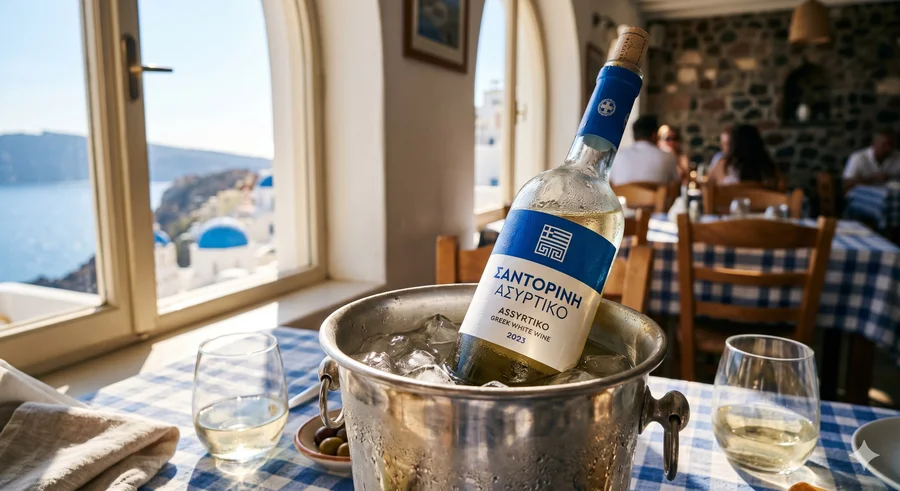
There is a particular kind of paralysis that can descend as the wine list hits the table. Your eyes scan for something reassuring, pronounceable and regularly ordered. A Rioja? A Sauvignon Blanc? A Chianti?
Giving in to these knee-jerk urges, we would gently suggest, can be a mistake.
Because the best wine on that list is very often the one you’ve never heard of, and is challenging to say out whilst retaining your credibility.
Key Facts
Core idea: The least familiar wine on a list is often the most interesting
Why it’s there: Chosen by a sommelier, buyer, or owner with personal conviction
Flavour profile: Typically distinctive, characterful, less “mass market”
Price positioning: Often mid-list, better value than the big names
Best places to try: Independent restaurants, bistros, ambitious gastropubs
Typical risk level: Lower than you think, higher reward than expected
What is this “order the weird stuff” rule?
In plain terms: skip the obvious, pick the unfamiliar.
Restaurant wine lists are not democracies. They are curated documents. Every bottle has fought for its place, and the obscure ones have usually done so on merit rather than name recognition, or the profit margins that come with volume sales.
The big brands, the famous regions, they’re there because they have to be. Customers expect them. But the oddities, the Georgian orange wine, the Greek red you can’t quite sound out, the Portuguese field blend with a label that looks like it was designed during a power cut, those are there because someone knowledgeable insisted they should be.
What does it taste like?
This is where things get interesting.
The unfamiliar often delivers:
Sharper personality, more acidity, more structure
Unexpected flavours, herbs, spice, texture, sometimes a touch of wildness
Less polish, in a good way, fewer edges sanded off for mass appeal
You may not always love it. But you will rarely be bored by it, and boredom is the cardinal sin of wine.
Where does this come from?
Not geography, but human behaviour.
A restaurant wine list is typically assembled by:
A sommelier with a point to prove
An owner with strong opinions and a good palate
A buyer who has tasted hundreds of wines and picked a handful
The obscure wines are rarely the default. They are the result of:
A tasting that made someone sit up
A producer with a story worth telling
A wine that over-delivered for its price
In short, they are there because someone cared enough to fight for them.
Best examples of what to look for (in UK restaurants)
You’re not hunting specific bottles, but patterns:
Greek reds like Xinomavro or Agiorgitiko
Usually bright, savoury, slightly wild, and criminally overlookedPortuguese blends beyond Port
Rich, structured, often exceptional valueSouthern Italian oddities, Aglianico, Nerello Mascalese
Volcanic, brooding, quietly brilliantSkin-contact whites, “orange wine”
Textural, aromatic, occasionally divisive, always interesting
If you can’t pronounce it and it isn’t on offer at your local Tesco, you’re in the right territory.
Food pairings
The joy here is that these wines often outperform the obvious choices:
That unfamiliar Italian red with your ragù will likely beat a safe Chianti
A slightly funky orange wine can transform roast chicken from Tuesday to theatre
A structured Portuguese red will take a steak and make it behave
They are chosen with food in mind, not just as solo performers.
The quiet psychology of the wine list
Here’s the part nobody tells you.
Most diners:
Gravitate to the familiar
Avoid looking foolish
Assume price equals quality
Restaurants know this. Which means:
The obvious wines are often priced with confidence
The lesser-known bottles are often priced to encourage discovery
So the weird option is not just more interesting, it is frequently better value.
Fun fact or myth busted
Myth: The sommelier wants to upsell you the most expensive bottle.
Reality: A good sommelier wants you to have a good time and come back.
Recommending an obscure, well-priced wine that delights you is far more powerful than flogging you a famous label you could have bought at home.
FAQs
Is it risky to order a wine I’ve never heard of?
Less than you think. Restaurants rarely list truly poor wines. The unfamiliar ones are usually there because they impressed someone who knows what they’re doing.
What if I don’t like it?
Then you’ve learned something, which is more than can be said for another safe but forgettable Sauvignon Blanc.
Should I ask the sommelier?
Yes, but give them a steer. Say, “Something interesting, mid-priced, I’m happy to try something new.” Watch their face light up.
Are these wines better value?
Often, yes. Lesser-known regions don’t carry the same pricing baggage as famous names.
Is this approach suitable for all restaurants?
It works best in places that care about their wine list. If the list is dull, the strategy has less to work with.
Closing
Next time that heavy wine list lands in front of you, resist the gravitational pull of the familiar. Ignore the Rioja you recognise, sidestep the Marlborough Sauvignon, and point, with quiet confidence, at something you cannot pronounce.
Worst case, you have an interesting story. Best case, you discover a wine that feels like it was put there just for you.
Better still, when it turns out to be excellent, and it usually does, you can nod knowingly, as if this was the plan all along.