


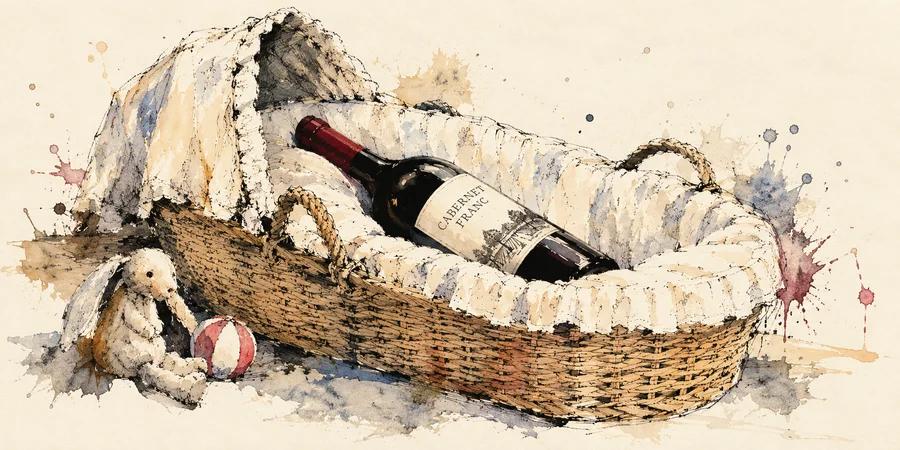
There is a particular sort of Saturday afternoon that befalls couples expecting their first child. It generally involves a large retail park, a bewildering quantity of beige equipment and a salesperson explaining why a newborn baby requires a sleeping arrangement that costs more than a decent weekend in France.
You went out for lunch. Perhaps a little shopping. Somehow, three hours later, you're discussing the suspension characteristics of a pushchair with a woman called Claire, who has convinced you that the wrong choice of travel system could permanently compromise your child's future.
You're six months pregnant. You have a spreadsheet. Somewhere in the conversation, the words ‘breathable organic cotton liner’ have been spoken without irony.
Stop.
Go home. Put the kettle on. Or, if you're the non-pregnant half of this enterprise, open a bottle of something agreeable.
We need to talk about the Moses basket.
The Moses basket and other expensive mistakes
The Moses basket is a charming little object. Woven wicker, soft lining, tiny mattress, perhaps a tasteful wooden stand. It looks wonderful in the nursery, particularly when photographed beside a stuffed rabbit and a carefully chosen shade of Farrow & Ball.
It is also a temporary bed for a person who will very shortly be too big for it.
The baby industry has managed to turn this simple proposition into an impressive commercial opportunity. First, you buy the basket. Then the stand. Then the bedding, which must be precisely the right size because, naturally, ordinary bedding won't do.
Before long you've spent a substantial sum on something that might enjoy a shorter working life than a supermarket basil plant.
And this is before the baby arrives.
The point isn't that a Moses basket is inherently useless. Some parents swear by them. Others discover that their child regards one with the same enthusiasm as a cat being introduced to a bath.
The point is that you have absolutely no idea which sort of baby you're getting.
You haven't met the customer yet. And you're already furnishing their house.
Buying every possible solution in advance simply means you'll own an expensive collection of answers to questions your particular baby may never ask.
Wait until the need presents itself. Then buy the thing that solves it.
There are few objects in domestic life that depreciate quite as enthusiastically as baby equipment. The second-hand baby economy is a magnificent institution, and you may even discover that somebody you know has one gathering dust in the loft.
Perfectly respectable baby clothes circulate between families, often barely worn. Highchairs, baby baths and mountains of toys pass from household to household like an informal national lending library.
Take advantage. Unfortunately, the same thriving second-hand market has yet to develop for Cabernet Franc.
And what about the wine?
You will have years ahead in which to spend money on your child. Most of it willingly, some of it bewilderingly, and a fair proportion on things that will be abandoned under the sofa.
For now, resist the pressure to acquire an entire department store's worth of baby equipment before you've even met the baby.
And if you happen to have a Moses basket-sized wedge of cash burning a hole in your pocket, we know a rather good alternative.
Buy a case of wine.
You can always get the basket later.
And you probably won't.