


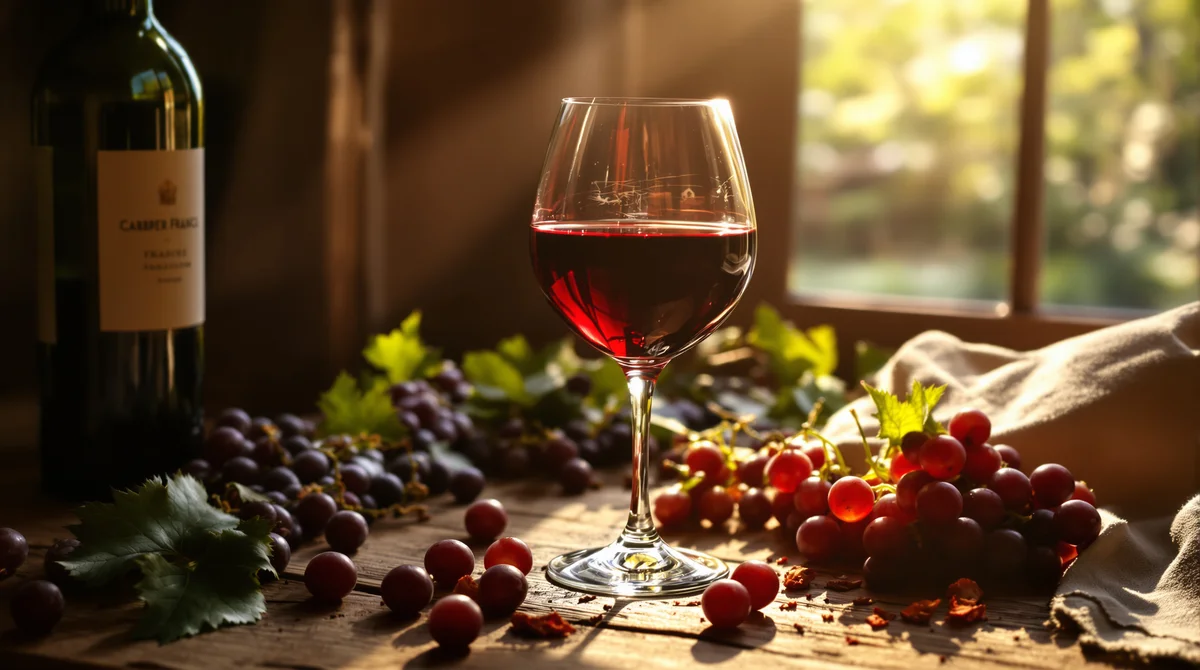
Cabernet Franc is what you open when you want red wine with a pulse, not a lecture.
It has the rare gift of being interesting before it becomes demanding. The first glass gives you raspberry, cherry, violet, herbs and that faint graphite edge that makes wine people start saying “pencil shavings” as if this were normal behaviour. The second glass explains why the Loire Valley has been taking it seriously for centuries.
For British drinkers, Cabernet Franc is one of the great underused reds: fresher than Cabernet Sauvignon, less plush than Merlot, more savoury than most easy-drinking supermarket reds, and much better with food than its modest fame suggests.
It is, to use the technical term, bloody lovely.
At a glance
Grape: Cabernet Franc
Colour: Red
Main regions: Loire Valley, Bordeaux, Friuli, Tuscany, Finger Lakes, South Africa, Argentina, Chile, Canada
Classic Loire appellations: Chinon, Bourgueil, Saint-Nicolas-de-Bourgueil, Saumur-Champigny
Style: Dry red, usually light to medium-bodied, aromatic, fresh and savoury
Flavours: Raspberry, red cherry, violet, graphite, herbs, green pepper, tobacco, earth
Structure: Fresh acidity, medium tannin, usually moderate alcohol
Serve: Slightly cool, around 13-16C
Food: Roast chicken, charcuterie, mushrooms, lamb, sausages, lentils, goat’s cheese, tomato dishes
Similar grapes: Cabernet Sauvignon, Merlot, Mencia, Barbera, Gamay, Cinsault, Carmenere
What is Cabernet Franc?
Cabernet Franc is a red grape variety best known in the Loire Valley as a varietal wine and in Bordeaux as a blending grape with Merlot and Cabernet Sauvignon.
That distinction matters. In Bordeaux, Cabernet Franc is often part of the architecture. It brings perfume, freshness and structure to blends, especially on the Right Bank in Saint-Emilion, Pomerol and Fronsac. It rarely gets the loudest billing, but it can be the reason the wine has lift rather than just weight.
In the Loire, Cabernet Franc is the lead singer. Chinon, Bourgueil, Saint-Nicolas-de-Bourgueil and Saumur-Champigny are the names to learn. Here the grape can be crunchy, floral, earthy, mineral, savoury and beautifully food-friendly.
It also happens to be one of the parents of Cabernet Sauvignon, which feels worth mentioning. Cabernet Sauvignon became the famous child with the big watch and expense account. Cabernet Franc is the parent who still dresses better.
What does Cabernet Franc taste like?
Cabernet Franc usually tastes of raspberry, red cherry, violet, graphite, herbs, green pepper, tobacco and earth. It is typically dry, medium-bodied, fresh and savoury, with brighter acidity and lighter tannin than Cabernet Sauvignon.
The word “green” needs a careful defence here. In poor Cabernet Franc, it can mean underripe, stalky and mean. In good Cabernet Franc, it means herbs, pepper leaf, graphite, tobacco and a savoury lift that stops the fruit becoming obvious.
Expect:
Raspberry
Red cherry
Redcurrant
Violet
Graphite
Pencil shavings
Green pepper
Dried herbs
Tobacco
Earth
Gravel
A faint leafy bitterness in some examples
Cabernet Franc is rarely about brute force. Its charm is in the angle of attack: scented rather than heavy, fresh rather than thick, savoury rather than sweetly polished. It is the red you want when Malbec feels like too much sofa and Pinot Noir has become financially emotional.
The best examples have a lovely tension between red fruit and herbal bite. They make you hungry, which is always a good sign in wine. A red that improves the thought of dinner is doing more useful work than a red that merely sits there being expensive.
Why does the Loire matter so much?
The Loire Valley is Cabernet Franc’s great solo stage. Bordeaux may give the grape aristocratic context, but the Loire lets it speak clearly.
Cabernet Franc thrives in the middle Loire because it ripens earlier than Cabernet Sauvignon, keeps its acidity, and suits the region’s cooler conditions. Around Touraine and Saumur, it finds the right mix of climate, limestone, tuffeau, gravel, clay and sand. That combination can produce wines with bright fruit, savoury perfume, fine tannins and the chalky, stony quality people sometimes describe as mineral.
The important names are:
Chinon
Chinon gives Cabernet Franc some of its most famous Loire expressions. Lighter wines can be juicy, raspberry-scented and ready for charcuterie, roast chicken or a slightly chilled glass in the garden. More serious Chinon, especially from stronger limestone or clay-limestone sites, can develop tobacco, leather, forest floor and savoury depth with age.
Bourgueil
Bourgueil often has a little more structure and earthy grip. Gravelly sites tend to give earlier-drinking, fruitier wines, while tuffeau and limestone-influenced slopes can produce firmer, longer-lived bottles. It is excellent territory for people who like their reds with a bit of chew and a lot of food usefulness.
Saint-Nicolas-de-Bourgueil
Saint-Nicolas-de-Bourgueil is often the friendliest route into Loire Cabernet Franc. The wines can be fragrant, fresh and lively, with raspberry, violet, graphite and gentle tannin. They are particularly good when lightly chilled and put near sausages, pâté, roast pork or mushrooms.
Saumur-Champigny
Saumur-Champigny is one of the great Cabernet Franc names. The wines are usually bright, aromatic and chalky, often with that combination of red fruit, herbs and limestone freshness that makes the grape feel both joyful and serious. It is also a very good answer to the question: “What red wine should I drink with roast chicken?”
Where else makes good Cabernet Franc?
Cabernet Franc is no longer just Loire plus Bordeaux. The wider wine world has realised that a grape with freshness, scent, moderate body and food compatibility is quite useful when not everyone wants a 15% red with the texture of a velvet curtain.
Bordeaux
In Bordeaux, Cabernet Franc is most important on the Right Bank, especially in Saint-Emilion, Pomerol and Fronsac. It is usually blended with Merlot and sometimes Cabernet Sauvignon. Its role is to add fragrance, freshness, graphite, leafy complexity and structure.
Some of Bordeaux’s most famous wines contain Cabernet Franc, although those are not the bottles most people are opening on a Wednesday with sausages. The everyday lesson from Bordeaux is simpler: Cabernet Franc is not just a pretty Loire grape. It has structural seriousness too.
Argentina
Argentina is one of the most exciting places for modern Cabernet Franc. In Mendoza, especially higher-altitude areas such as the Uco Valley, the grape can produce darker, riper wines with black cherry, plum, herbs, spice and freshness. These are often fuller than Loire examples but can still keep Cabernet Franc’s aromatic lift.
If Loire Cabernet Franc is raspberry, pencil shavings and a good lunch, Argentinian Cabernet Franc is darker fruit, mountain air and grilled meat.
South Africa
South Africa makes Cabernet Franc both as a varietal wine and in Bordeaux-style blends. Stellenbosch is particularly important, but cooler or more maritime areas can also show promise. Expect ripe fruit, herbs, spice and a savoury firmness.
South African Cabernet Franc can be very useful for UK drinkers because it often gives more richness than Loire examples without losing the grape’s herbal identity.
United States
The Finger Lakes in New York State has become a serious Cabernet Franc region. The cool climate suits the grape’s freshness and aromatic character, giving wines with red fruit, herbs, moderate body and crisp acidity.
California and Washington also produce Cabernet Franc, though styles vary widely. Some are dark, polished and oak-influenced. Others are fresher and more restrained.
Canada
Canada grows Cabernet Franc in regions such as Ontario and British Columbia. It can make dry red wines, rosé and icewine, though dry reds are the most relevant for this discussion. In cooler sites, expect freshness, red fruit and herbal notes.
Italy
Northern Italy grows Cabernet Franc in regions including Friuli-Venezia Giulia and Veneto, while Tuscany uses it in some international-style reds. Italian Cabernet Franc can range from leafy, savoury and medium-bodied to polished and ambitious.
Friuli is particularly interesting because Cabernet Franc sits comfortably alongside other aromatic, food-friendly grapes. The wines can have freshness, herbs and a slightly wild borderland energy.
Chile
Chile grows Cabernet Franc in several regions, often as part of blends but increasingly as a varietal wine. It can show ripe red and black fruit, herbs, tobacco and freshness. The best examples avoid becoming too glossy.
Hungary and central Europe
Cabernet Franc has found a meaningful home in parts of central Europe, including Hungary. Villány, in particular, has built a reputation for serious Cabernet Franc, often richer and more structured than Loire examples.
What food goes with Cabernet Franc?
Cabernet Franc is one of the most food-friendly red grapes because it has freshness, moderate tannin and a savoury herbal edge. It works with roast chicken, pork, lamb, mushrooms, lentils, charcuterie, goat’s cheese and tomato-based dishes.
This is where the grape earns its praise. It has enough acidity to cut through fat, enough tannin to stand up to meat, and enough perfume to keep vegetable and mushroom dishes interesting.
Classic pairings
Cabernet Franc and roast chicken is one of the great underrated red-wine pairings. The wine has enough structure for browned skin and savoury juices, but it does not flatten the bird in the way a heavier Cabernet Sauvignon can.
It is also excellent with charcuterie, especially saucisson, rillettes, pâté and ham. Loire Cabernet Franc and cured pork feel like they were designed by people who understood lunch as a civic duty.
Mushrooms are another natural match. Mushroom risotto, mushroom tart, grilled portobellos, mushroom pasta and anything with thyme or garlic will flatter the grape’s earthy side.
Everyday pairings
This is not a wine that needs restaurant conditions. Try Cabernet Franc with:
Sausages and mash
Roast chicken leftovers
Pork chops
Burgers
Pizza with mushrooms or salami
Lentil ragu
Tomato pasta
Shepherd’s pie
Cheese and ham toasties
Bacon sandwiches
Hard cheese
Goat’s cheese
A lighter Loire Cabernet Franc can also work surprisingly well with tuna steak or salmon, especially if there are herbs, tomatoes or lentils involved.
What to avoid
Avoid very sweet sauces, very hot chilli, delicate white fish and creamy dishes with no savoury depth. Cabernet Franc’s herbal edge and tannin can taste sharper if the food is too sweet or too fiery.
It is not the red for sticky barbecue sauce unless the wine is riper and fuller. For classic Loire Cabernet Franc, think herbs, smoke, mushrooms, pork, tomato and roast poultry rather than sugar and chilli.
Should Cabernet Franc be chilled?
Cabernet Franc is often better slightly chilled, especially lighter Loire styles. Aim for around 13-16C rather than room temperature.
“Room temperature” is a historical trap. It did not mean a centrally heated British sitting room in September. A warm Cabernet Franc can taste loose, leafy and alcoholic. A slightly cool Cabernet Franc tastes brighter, fresher and more coherent.
Put the bottle in the fridge for 20 to 30 minutes before serving. Not ice cold. Just cool enough to sharpen the fruit and keep the herbal edge attractive.
Where can you buy Cabernet Franc in the UK right now?
Cabernet Franc is not yet as easy to find as Malbec, Rioja or Pinot Noir, but UK availability is much better than it used to be. At the time of writing, current UK options include Loire Cabernet Franc, Argentinian Cabernet Franc, southern French Cabernet Franc and Bordeaux blends with Cabernet Franc in supermarkets, wine merchants and online specialists.
Current examples include:
M&S, which lists an M&S Found Cabernet Franc from Argentina and also stocks Bordeaux bottles where Cabernet Franc appears as part of the blend.
Waitrose, which lists several Cabernet Franc options, including Loire reds such as Saumur and Saint-Nicolas-de-Bourgueil, plus an organic Cabernet Franc from France.
Tesco, which lists Les Terrasses St Nicolas Cabernet Franc from Saint-Nicolas-de-Bourgueil.
The Wine Society, which lists Le Bosc Cabernet Franc, Pays d’Oc as in stock.
Majestic, which lists Argentinian Cabernet Franc from Mendoza and Uco Valley, alongside Bordeaux blends where Cabernet Franc plays a supporting role.
As always, stock changes but availability of cabernet franc across the major retailers is a reliable constant.
Is Cabernet Franc worth the money?
Cabernet Franc can be excellent value because it has personality before it has fame. Loire examples in particular can offer freshness, structure and regional character without the price inflation attached to Burgundy or top Bordeaux.
That may change. Wine fashion is not famous for leaving useful things alone. But for now, Cabernet Franc remains one of the better hunting grounds for drinkers who want something interesting, food-friendly and not completely obvious.
The value sweet spot is usually in Loire reds, southern French varietal bottles, Argentinian examples and some South African wines. Bordeaux can be brilliant, but Cabernet Franc is often blended there and the famous names can become expensive quickly.
Why is Cabernet Franc having a moment?
Cabernet Franc is having a moment because drinkers increasingly want fresher, lighter, more aromatic red wines that work with food and can be served slightly cool.
For years, the lazy line was that Cabernet Franc was a blending grape. True in Bordeaux, but not the whole truth. The Loire has been making distinctive Cabernet Franc for centuries, and regions such as Chinon, Bourgueil and Saumur-Champigny did not suddenly discover their purpose because a sommelier in Hackney got excited.
What has changed is the audience. People are moving away from red wines that taste like jam, oak and a conference hotel carpet. They want reds with crunch, perfume and drinkability. They want something that can sit beside roast chicken, mushrooms, charcuterie, pizza, lentils and Sunday leftovers.
Cabernet Franc is built for that shift. It has enough seriousness for the wine person at the table and enough immediate charm for everyone else.
That is rare.
Most things are one or the other.
FAQ
What does Cabernet Franc taste like?
Cabernet Franc tastes of raspberry, red cherry, violet, herbs, graphite, green pepper, tobacco and earth. It is usually fresh, savoury and medium-bodied, with brighter acidity and lighter tannin than Cabernet Sauvignon.
Is Cabernet Franc red or white?
Cabernet Franc is a red grape variety. It usually makes dry red wine, but it can also be used for rosé and sparkling rosé.
Is Cabernet Franc the same as Cabernet Sauvignon?
Cabernet Franc is not the same as Cabernet Sauvignon. Cabernet Franc is lighter, fresher and more aromatic, while Cabernet Sauvignon is usually darker, fuller, more tannic and more powerful.
Is Chinon made from Cabernet Franc?
Red Chinon is usually made from Cabernet Franc. Chinon is one of the Loire Valley’s classic appellations for Cabernet Franc-based red wine.
What food goes with Cabernet Franc?
Cabernet Franc goes well with roast chicken, charcuterie, mushrooms, pork, lamb, sausages, lentils, goat’s cheese and tomato-based dishes. Its freshness and savoury edge make it unusually flexible with food.
Should Cabernet Franc be chilled?
Cabernet Franc is often best served slightly chilled, around 13-16C. Lighter Loire styles can take a little more chill, while fuller Bordeaux, Argentinian or South African examples should be served a touch warmer.
Does Cabernet Franc age well?
Cabernet Franc can age well when it comes from serious sites and careful producers. Simple bottles are best young, but top Chinon, Bourgueil, Saumur-Champigny and Bordeaux examples can develop tobacco, leather, earth and savoury complexity.
What is Cabernet Franc similar to?
Cabernet Franc can appeal to drinkers who like Cabernet Sauvignon, Merlot, Mencia, Barbera, Gamay, Cinsault or lighter Syrah. It has red fruit and freshness, but also a savoury herbal edge.
Is Cabernet Franc good value?
Cabernet Franc can be very good value, especially from the Loire Valley, southern France, Argentina and South Africa. Famous Bordeaux blends can be expensive, but varietal Cabernet Franc often offers a lot of character for the money.
Is Cabernet Franc worth the money?
Absolutely. Loire Francs between £10 and £20 offer some of the best value in French red wine. You will struggle to find this much personality for the price elsewhere.
Should I decant Cabernet Franc?
Younger, lighter styles are fine straight from the bottle. For more structured examples, 30 minutes in a decanter opens things up nicely.
Verdict
Cabernet Franc is absolutely worth drinking if you like red wine with freshness, fragrance and savoury bite. It is lighter than Cabernet Sauvignon, less plush than Merlot and often more interesting than either when dinner involves chicken, mushrooms, charcuterie, lamb, lentils or herbs.
The grape’s great trick is charm without flimsiness. It can be juicy, floral and easy to drink, but it can also be serious, structured and age-worthy. It does not need to shout. It just needs a glass, a plate of something savoury and someone sensible enough to open it.
Cabernet Franc is bloody lovely.
Discuss if you must.
We will be drinking.