


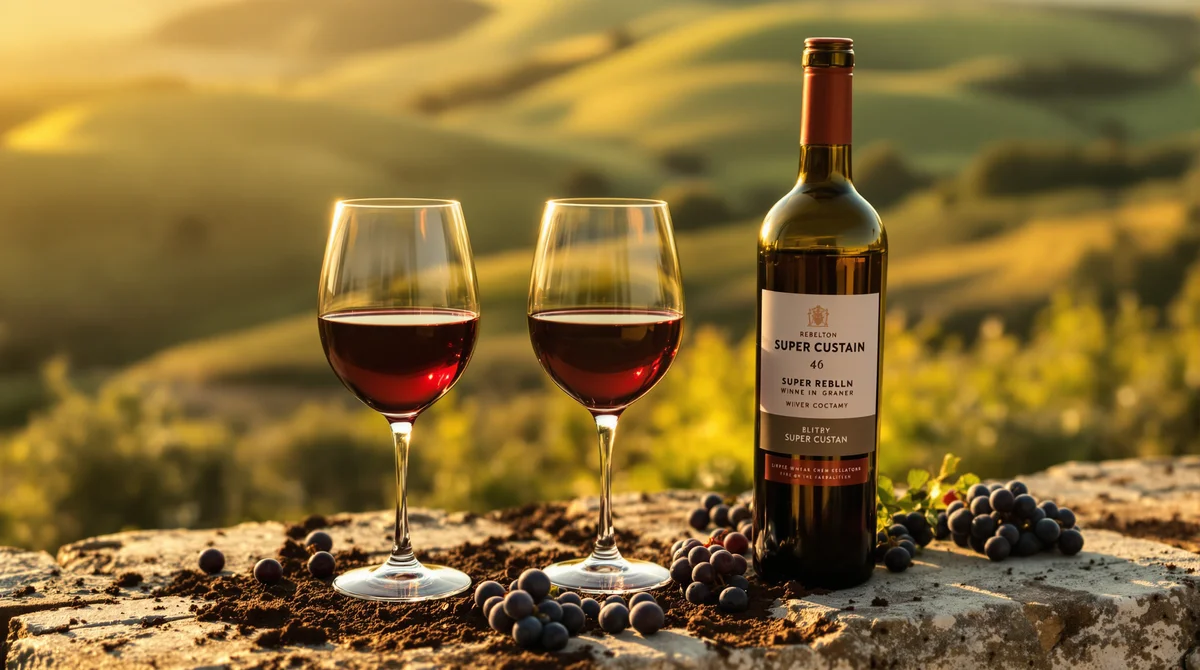
What actually makes a wine “Super Tuscan”?
In the 1960s and 70s, a few rebellious producers in Tuscany looked at the rulebook, sighed, and quietly set it on fire.
At the time, Italy’s strict classification system dictated:
Which grapes you could use
How much of each
Even how the wine should taste
Producers like Sassicaia and Tignanello decided they could do better. They:
Introduced Bordeaux grapes like Cabernet Sauvignon
Aged wines in French oak barrels instead of traditional methods
Focused on quality over compliance
The authorities weren’t amused. These wines were initially labelled as lowly table wine.
The market, however, had other ideas. Prices soared. Critics swooned. “Super Tuscan” was born, not as an official category, but as a badge of quiet defiance.
What do they taste like?
If traditional Chianti is your charming, slightly chaotic Italian uncle, Super Tuscans are his sharply dressed cousin who’s just come back from a decade in Bordeaux.
Expect:
Rich black fruit: blackberry, plum, black cherry
Structure: firm tannins, proper backbone
Oak influence: vanilla, cedar, spice
Freshness: often a Tuscan acidity keeping things lively
Some lean more towards Bordeaux elegance, others retain that sun-baked Italian soul. The best manage both, which is where things get interesting.
Where do they come from?
Most Super Tuscans are produced in coastal Tuscany, particularly around Bolgheri.
This area benefits from:
Warm Mediterranean climate
Cooling sea breezes
Gravelly soils, ideal for Cabernet varieties
It’s no coincidence that Bolgheri now produces some of Italy’s most sought-after wines.
Why should you try them?
1. They’re Italy without the training wheels
If you’ve found some traditional Italian wines a bit… angular, this is your way in. Super Tuscans are more internationally styled, smoother, and easier to “get” on first sip.
2. They punch well above their weight
Yes, the big names can be expensive. But plenty of lesser-known bottles deliver serious quality for £15–£30.
3. They bridge Old World and New
They combine:
European structure and restraint
New World fruit and polish
A rare and rather compelling combination.
What should you actually buy in the UK?
You don’t need to remortgage the house to get started. Try:
Tesco Finest Bolgheri Rosso (£12–£15)
A gentle introduction, Cabernet-led, smooth, and crowd-pleasingVilla Antinori Toscana Rosso (£15–£20)
From the family behind Tignanello, a gateway into the styleLe Volte dell'Ornellaia (£20–£25)
A second wine from Ornellaia, polished and plush
If you’re feeling flush:
Sassicaia (£200+)
Ornellaia (£150+)
These are benchmark wines, not everyday gluggers, unless your “everyday” is rather more ambitious than most.
What should you eat with them?
Super Tuscans love food, ideally something with a bit of swagger:
Steak, preferably charred and unapologetic
Lamb, rosemary-heavy and slightly overdone in the best way
A proper ragù, the sort that’s been bubbling all afternoon
Hard cheeses, anything that smells faintly of a farmyard
They’re not delicate wines. Treat them accordingly.
A quick myth to bust
“They’re all blends with international grapes.”
Not always.
Some Super Tuscans are actually 100% Sangiovese, just made in a way that breaks the old rules. It’s less about the grape, more about the philosophy: quality first, bureaucracy later.
So, should you bother?
In a word, yes.
Super Tuscans are:
Approachable without being dull
Sophisticated without being snobbish
Expensive at the top end, but full of value lower down
They’re also a reminder that some of the best things in wine, and life more broadly, happen when someone politely ignores the rules and gets on with making something better.
Next time you’re in Tesco, Majestic, or browsing online, throw a Bolgheri red into the trolley.
Better still, open it with something meaty, something loud, and someone who’ll appreciate it.