


Casillero del Diablo Chardonnay 75cl
Chardonnay12.5%
£8.44

Close to the Pacific, freshness needs no altitude alibi.
Chile
The Pacific does not warm politely before meeting the Chilean coast. Cold water, fog and wind enter the hills around San Antonio, where Sauvignon Blanc can taste of lime, herbs and salt beside a plate of shellfish. The proximity is physical, not a marine-themed label treatment.
Leyda is the name British drinkers are most likely to meet. It sits within the wider San Antonio Valley, alongside Lo Abarca and Rosario, and has built a strong identity for Sauvignon Blanc, Pinot Noir, Chardonnay and peppery Syrah.
These are relatively young fine-wine regions, planted seriously only in recent decades. Their achievement is clear. The remaining task is to preserve coastal flavour rather than harvesting so early that acidity is all the wine has to say.



 and more, live from leading UK retailers
San Antonio and Leyda wine comes from Pacific-facing valleys west of Santiago that specialise in high-acid whites and fragrant cool-climate reds.
San Antonio lies south of Casablanca in Chile’s wider Aconcagua wine region. Vineyards sit close to the cold ocean and within the Coastal Range. Morning fog, wind and modest summer temperatures extend ripening, while irrigation remains necessary in the dry climate.
Leyda is the largest and best-known sector. Sauvignon Blanc produces lime, grapefruit, herbs and a salty impression. Pinot Noir gives red cherry, raspberry and savoury spice. Chardonnay brings more texture, while Syrah can be floral and distinctly peppery.
Lo Abarca lies very close to the coast and can be even cooler. Rosario sits farther inland in rolling country, allowing slightly riper fruit. The regional label is informative, but smaller names explain why one San Antonio Sauvignon Blanc feels lean and another has greater breadth.
San Antonio and Leyda wine commonly tastes of citrus, herbs and salt in whites, with red berries, flowers and pepper in reds.
Sauvignon Blanc is the sharpest regional signal, combining citrus, green herbs and persistent acidity. Chardonnay adds peach, lemon and lees-derived texture. Very early harvesting can leave either grape narrow rather than precise.
Pinot Noir is fragrant and red-fruited, often with herbs and earth. Syrah can deliver violet, black pepper and olive at moderate body. These wines depend on flavour ripeness as much as acid retention, a distinction that a thermometer cannot settle.
San Antonio and Leyda wine comes from coastal hills and valleys close to Chile’s central Pacific shoreline.
Modern vineyards expanded from the late 1990s as irrigation and coastal site selection made commercial fine wine possible. San Antonio and Leyda quickly became reference points for Chilean Sauvignon Blanc and Pinot Noir.
Chardonnay12.5%

Shiraz / SyrahMaipo Valley14.2%
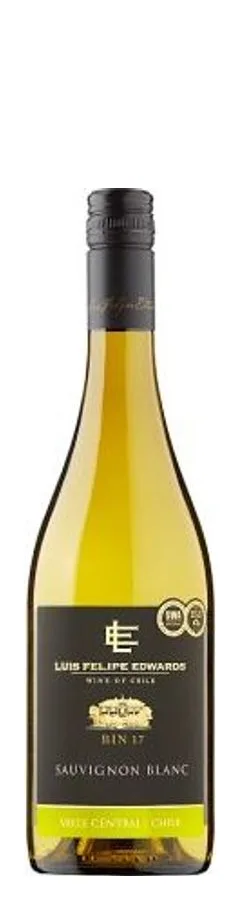
Sauvignon BlancCentral Valley Chile202612.5%

Cabernet SauvignonValle Central12.5%

MerlotValle Central12.1%

Merlot Cabernet Sauvignon SyrahRapel Valley202214%

CarménèreCasablanca Vally202413.5%

Malbec12.5%

ChardonnayLimarí Valley12.7%


Cabernet Sauvignon

Chardonnay Pedro XimenezCentral Valley Chile202513.5%
San Antonio and Leyda wine pairs with shellfish, oily fish, goat’s cheese and green vegetables because its high acidity and coastal flavours refresh the palate.
The whites handle citrus, salt and herbs particularly well. Pinot Noir suits richer fish, while peppery Syrah can take smoke without requiring a heavy sauce.
San Antonio is the broader coastal valley, while Leyda is its largest and most widely recognised smaller formal origin.
Leyda supplies much of the vineyard area and appears frequently on UK labels. Lo Abarca is a named DO area, while Rosario is a commonly recognised wine sector. Their distances from the ocean and degrees of shelter differ.
A bottle labelled Leyda gives more specific origin than one labelled San Antonio. That does not make it automatically better. The useful distinction is geographic, not a formal quality ladder.
Leyda is best known for Sauvignon Blanc, Pinot Noir, Chardonnay and cool-climate Syrah. Its wines commonly show high acidity and pronounced coastal freshness.
Leyda is a recognised sector within San Antonio Valley. It is the largest and most familiar San Antonio origin in export markets.
San Antonio is generally more directly exposed to the Pacific than Casablanca, especially at Lo Abarca and Leyda. Exact site matters in both regions.
Leyda Sauvignon Blanc commonly tastes of lime, grapefruit, green herbs and salt. It is usually dry and high in acidity.
Leyda Pinot Noir is best around 13-15°C. Slight chilling emphasises its red fruit and freshness without suppressing aroma.
Concentrated Chardonnay, Pinot Noir, Syrah and traditional-method sparkling wine from San Antonio can age for several years. Most Sauvignon Blanc is best young.
San Antonio and Leyda offer strong value for distinctive coastal Sauvignon Blanc and Pinot Noir. Very small origins cost more, so flavour should justify the scarcity premium.
A beginner should start with Leyda Sauvignon Blanc, then try Pinot Noir or Syrah. The comparison shows the region’s white and red coastal vocabulary.
San Antonio and Leyda wine is worth buying for some of Chile’s clearest coastal whites and most fragrant cool-climate reds.
Avoid wines picked so early that acidity has replaced flavour. The best bottles taste brisk but complete, with the Pacific supplying the conditions and the grower supplying the judgement.